
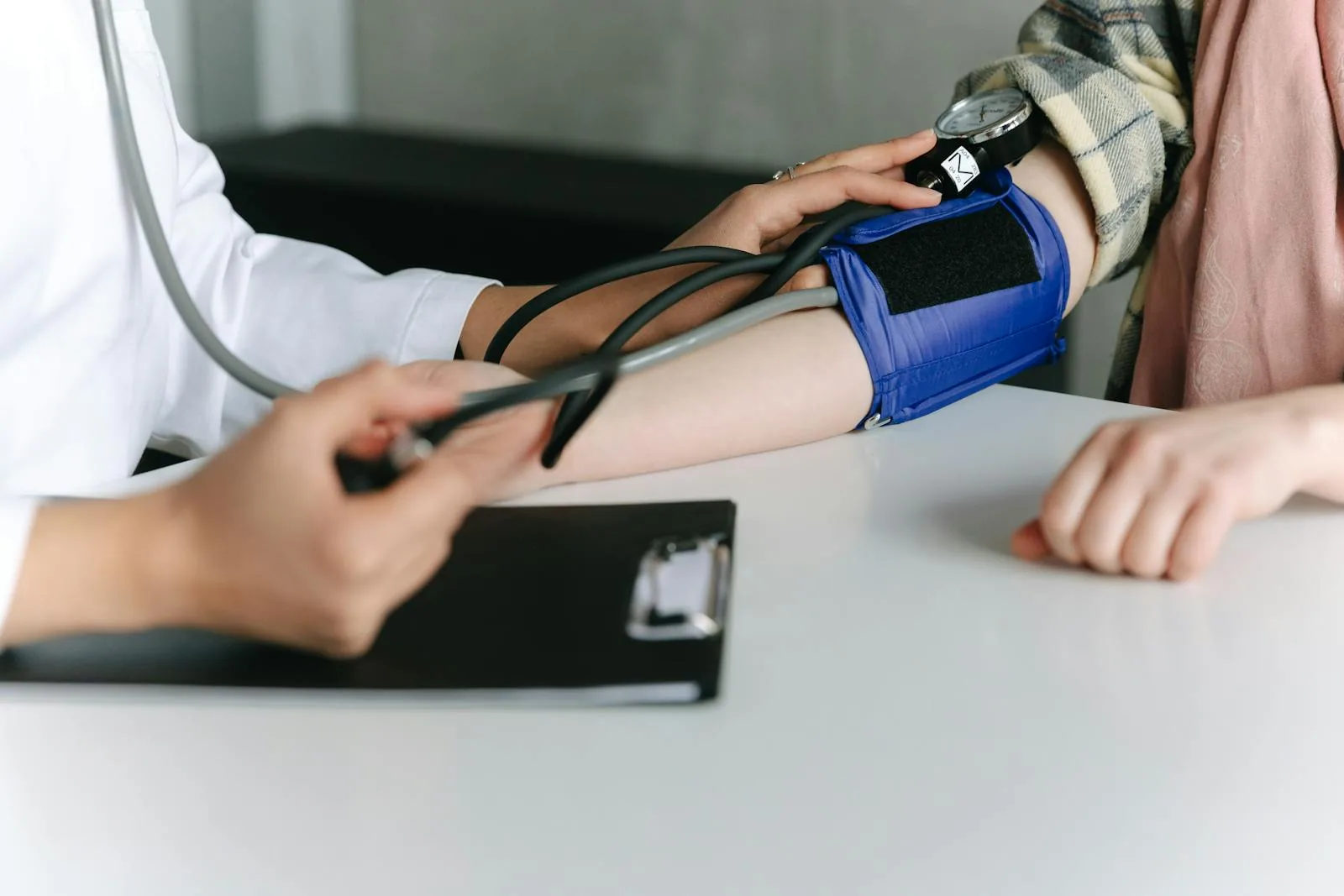
High Blood Pressure Care in Port St. Lucie, FL
High blood pressure (hypertension) means the force of blood pushing against your artery walls stays too high over time, which strains your heart and vessels. Care for high blood pressure with Johanna Delphin, FNP — in person in Port St. Lucie and by secure telehealth across Florida.
In plain English
High blood pressure (hypertension) means the force of blood pushing against your artery walls stays too high over time, which strains your heart and vessels.
What high blood pressure actually is
Blood pressure is the force your blood exerts against the walls of your arteries as your heart pumps. It's written as two numbers — the top (systolic) is the pressure when your heart beats, and the bottom (diastolic) is the pressure between beats. High blood pressure, or hypertension, means that force stays too high over time. In general terms, readings at or above 130/80 are considered elevated for most adults, though your provider interprets your numbers in the context of your whole health.
The reason hypertension matters is that the extra pressure quietly strains your heart, arteries, kidneys, and eyes year after year. Left unmanaged, it raises the risk of heart attack, stroke, kidney disease, and other serious problems. The encouraging part is that high blood pressure is one of the most treatable conditions in medicine — with accurate measurement, the right plan, and steady follow-up, most people can get their numbers into a healthy range.
Symptoms and warning signs
High blood pressure is often called the "silent killer" because most people have no symptoms at all, even when their readings are high. You can't feel it the way you'd feel a fever or a sore throat — which is why so many people don't know they have it. That's exactly why regular blood-pressure checks, at a visit or with a validated home monitor, are so important.
When symptoms do occur, they're usually nonspecific — an occasional headache, lightheadedness, or shortness of breath — and they tend to appear only when pressure is very high or has been elevated for a long time. Because you can't rely on how you feel, the only way to know your numbers is to measure them.
How Delphi Health & Wellness manages hypertension
At Delphi Health & Wellness, managing high blood pressure starts with getting an accurate picture. A single high reading in the office isn't the whole story, so we look at the pattern — including home readings when helpful — before deciding on a plan. Johanna Delphin, FNP, walks you through what your numbers mean clearly and what target makes sense for you.
From there, the plan typically combines lifestyle steps that genuinely move the needle — things like sodium, activity, sleep, alcohol, and weight — with medication when it's warranted. There are several effective, well-established blood-pressure medications, and the right choice depends on your other conditions and how your body responds.
Because blood pressure rarely travels alone, we keep an eye on the company it keeps — cholesterol, blood sugar, and kidney health — and coordinate with a cardiologist or other specialist when your care calls for it.
What to expect from your care
Your visit is an unhurried conversation. We review your readings, your history, and any medications you're taking, then agree on a clear target and a starting plan together. If we recommend home monitoring, we'll show you how to do it correctly — proper cuff size, arm position, and timing all matter for an accurate number. You leave with a written plan so you know exactly what's next.
Follow-up is where blood pressure control is won. We set a check-in rhythm that matches how stable your numbers are, recheck after any medication change, and keep adjusting until you're in range and steady. This page is health education, not medical advice — your plan depends on your individual health, so please book a visit so we can build it with you.
When to see a provider
See a provider if your readings are consistently elevated, if you've been told before that your pressure runs high, or if you simply haven't had it checked in a while. Because hypertension is usually silent, a routine check is often the only way it's found — and the earlier it's caught, the easier it is to protect your heart and vessels.
Call 911 or go to the emergency room for a hypertensive emergency: a reading of about 180/120 or higher together with chest pain, shortness of breath, vision changes, severe headache, confusion, trouble speaking, or weakness or numbness on one side of the body. These can be signs of a heart attack or stroke and need immediate care — do not wait.
Signs and symptoms to watch for
Symptoms vary from person to person, and some people have none at all. If any of these sound familiar, it's worth getting checked:
- Usually no symptoms at all — it's often called the "silent" condition
- Occasional headaches in some people
- Lightheadedness or dizziness
- A consistently high reading on a home or pharmacy monitor
- Shortness of breath with exertion in longstanding cases
Call 911 for these warning signs
This page is health education, not medical advice. Some symptoms are emergencies — call 911 or go to the nearest emergency room right away if you have:
- A reading of 180/120 or higher with chest pain, shortness of breath, or vision changes
- Sudden severe headache, confusion, or trouble speaking
- Weakness or numbness on one side of the body
- Chest pain or pressure
The service behind this care
High Blood Pressure is managed as part of our broader chronic disease management service. Explore how we keep your numbers steady and your plan on track:
Chronic Disease ManagementDiabetes, blood pressure, thyroid, cholesterol, and more — managed steadily and proactively, with you in the driver's seat.Why patients choose Delphi for high blood pressure
Time to be heard
Unhurried 30–45 minute visits so we can dig into what's actually going on.
One trusted provider
Continuity of care with Johanna — she knows your history and your goals.
Telehealth across Florida
Secure video visits for follow-ups, lab reviews, and medication adjustments.
In-person in Port St. Lucie
Hands-on exams and in-office testing at our clinic on Okeechobee Road.
Related reading
More from our blog to help you stay ahead of your health:
Common questions about high blood pressure
What blood-pressure reading is considered high?
Do I need medication, or can I manage it with lifestyle?
Can a nurse practitioner treat high blood pressure in Florida?
How should I measure my blood pressure at home?
Can we handle follow-ups by telehealth?
Do I need a referral to be seen for high blood pressure?
This page is for general education and is not a substitute for medical advice, diagnosis, or treatment. Your care should be tailored to you — please book a visit to discuss your situation. In an emergency, call 911.
Other conditions we treat
Steady, proactive management for the conditions that need it most — in person in Fort Pierce and via telehealth across Florida.

Type 2 Diabetes
Port St. Lucie & Treasure Coast
Diabetes care in Port St. Lucie with Johanna Delphin, FNP — steady A1C management, plain-English numbers, and telehealth check-ins across Florida.
Type 2 Diabetes care
Thyroid Disorders
Port St. Lucie & Treasure Coast
Thyroid care in Port St. Lucie with Johanna Delphin, FNP — testing, diagnosis, and steady medication management for an under- or overactive thyroid, plus telehealth statewide.
Thyroid Disorders care
High Cholesterol
Port St. Lucie & Treasure Coast
Cholesterol care in Port St. Lucie with Johanna Delphin, FNP — clear lab numbers, lifestyle and medication when needed, and telehealth follow-ups across Florida.
High Cholesterol careCare that listens. Care that lasts.
Schedule a visit in Port St. Lucie or via telehealth across Florida. We're accepting new patients.